
Last Thursday we ran our first Tatoma masterclass: an hour helping people understand what to weigh up when planning their AI initiatives. The point I really wanted to make was that a company’s AI strategy (or your personal one, for that matter) doesn’t need to look any certain way. It depends entirely on where you’re starting from, and what your priorities are.
That’s what I went in with. But I came out with far more. That’s the beauty of a co-host who’s made a career out of examining and improving work processes. In this case, Cecilie Bonde Christiansen from Denmark’s LUNAI Consulting.
Since my promise with these masterclasses is for you to learn ‘what others learned the hard way’, here it is:
Mistake 1: Thinking AI literacy = a training module
When you think about AI education, it’s easy to think of learning modules and enablement sessions. Cecilie pushed us past that. She reminded the class that a learning culture is just as important as good material.
I’m lucky to have spent most of my career in learning-centric, “safe to make mistakes” environments. I may have forgotten that not all companies are like that. But absolutely no one gets AI right the first time. There must be space for experimentation.
Establishing a learning culture, making room to discuss big fails along with the wins, might be the single best thing your company can do to up AI adoption.
The fix can be small. One company Cecilie worked with ran a “hack of the week”. Another had a “fail of the month”. Both gave people an informal place to share what they’d tried.
Mistake 2: Focusing on efficiency alone
You’ve heard this one before: “You have AI now, you’ll work faster.”
Anyone who’s set up a decent agent or automation knows that it takes a while for this to be true.
Eventually though, after much tinkering, some AI setups do improve your efficiency.
And then what?
The time people save is real, but it leaks away. It goes into the next email, the next meeting, the coffee machine. Cecilie said out loud what I was thinking: “Nobody asks their manager what to do with the twenty minutes they just got back.”
Even if they did, it’s not realistic to track every small saving. “What you can do is decide, as a team, what the time is for. More clients? More depth with the clients you have? Better work? A shorter week?” That last one has my vote.
If you haven’t decided where the saved time goes, the value stays invisible. You’re just using AI for AI’s sake and not becoming any more competitive (which was the reason you decided to adopt AI in the first place, wasn’t it?).
Mistake 3: AI-ifying everything
AI has made automation easy… too easy. Not everything that can be done with AI should be.
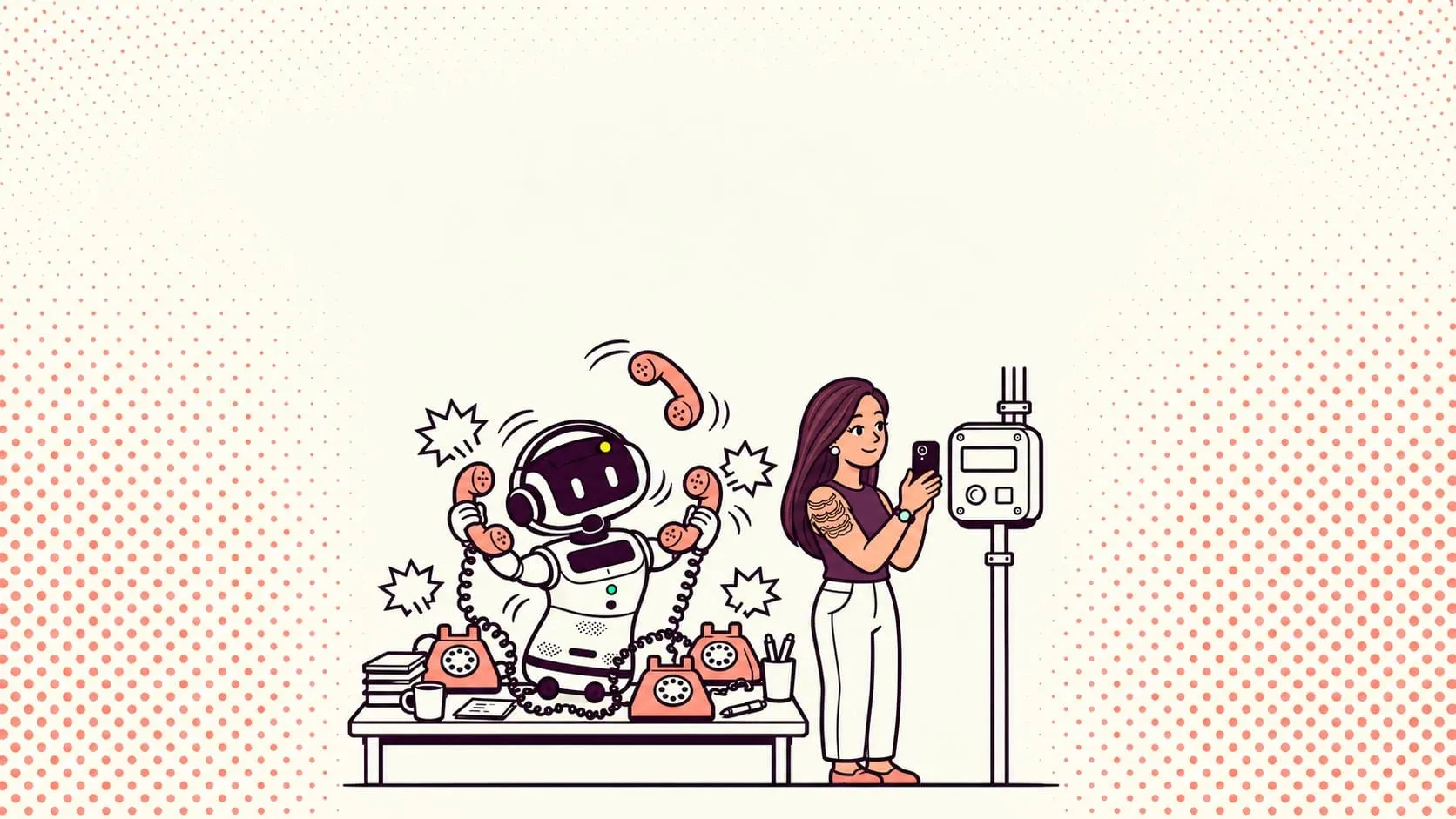
Cecilie mentioned this case (from Rewired): An energy company previously required customers to phone in their meter readings. The company replaced the staff taking the calls with AI agents. The agents log the reading, prepare the invoice and hand over to a person when needed.
There are at least two things wrong with this initiative:
-
It helped the company, but added no value to the customer. In fact, it likely made the customer experience worse. Plenty of AI-fatigued customers want human help.
-
It replicated the manual solution (the call centre), rather than revisiting the problem.
The company assumed the old solution was still the right one. But AI gives us new solutions to old problems. A whole different system, like uploading a photo of the meter reading, could’ve benefited all parties in new and wonderful ways.
When exploring automation, start with the problem the process solves. Sometimes the answer is a simpler process. Sometimes it isn’t AI at all.
Catch the replay
I’ve given you my highlights from the masterclass, but you might have an entirely different take. Catch the replay for yourself and work through the exercise. You could even do it with a few colleagues and compare notes. Where your answers differ is where the useful conversation starts. It might be your first step towards an AI plan that makes sense for your organisation.
Want stories like this, direct to your inbox?